Showing posts with label development. Show all posts

Friday, October 4, 2019

#IndependentWoman

Recently I was facing certain questions about myself and you know, you'd think that by the time you turn 33 years-old you already have your personality completely figured out. And I think I know pretty much who I am and I am proud of the woman I've become. I am grateful for everything I had in my life, and I am satisfied with my career as it is.

I get asked many times if I wouldn't want to have more work in the music and then I think about the 3 ensembles I manage, the 2 choirs I am conducting and another ensemble I am coaching, the churches I am doing musical duties at, and there's this foundation (Stichting Zin in Zingen) I am working with, and the projects I am doing as a guest singer occasionally and so on, and there's teaching and then I am like: Work even more? Isn't this just enough? Yeah, of course, it would be great to become rich and doing that CD recording I've been being asked in the summer whether I have one or not, but next to a part-time job and the diverse musical activities I have and my own vocal- and personal development I have hardly time for posting new entries on this blog, not to mention the fact that when I mention to my Friday date all the things I listed above just now, I get two different reactions. The first reaction is that they ask me if I'd have any room at all for a relationship being so busy, and they already assuming I don't, without me actually giving an answer to this question. The second reaction is that they don't ask this question, just assume that I'd probably don't have time for a relationship so I'd obviously wouldn't mind being treated as a hook-up material or just simply back off - what flattering options to have, isn't it? Anyway, I get assumptions and they make decisions for me without even being asked whether I'm fine with their conclusion or not (let me tell you, no woman would be satisfied or happy with a man making decisions for them - I know, this might be shocking for many! - insert sarcastic joke here). Well, for these gentlemen, whose head are full of their assumptions about me and my intentions, I have no room, no emotional energy and definately no time at all (unless they come out of their head and stop reading between my lines 馃槈)
So work more? I don't know, maybe. But surely not wasting time for delusional men.

The best was when I was accused of not being a feminist. Well, this made me think a little. I have always considered myself as an "equalist" when it comes to gender rights and gender gap. When I say "equalist", I mean I believe that men and women deserve to be treated as equal, since both of them belong to the human race. There shouldn't be any discrimination based on biological differences. I don't like to call myself a feminist, because then I would be considered as a feminazi as well, who hate men, and as a matter of fact I don't hate men. I love them! I love everything about them! They make great friends and some of them can be excellent lovers (I guess) and very few of them could make exceptionally good partners (the kind I am looking for, actually). In the old fashioned way, I am a true feminist, I act like one. I take pride in the fact that I pay for my monthly expenses, my rent, food on my own, and really I am the Independent Woman from the Destiny's Child song. I am super excited about the 8-week long boxing training I'm about to begin in the end of this month. I am proud of the fact that I can make it on my own without the financial support of some boyfriend or husband or anyone, actually. It's not that I wouldn't need or wouldn't want to have a relationship...

Or well, you know what?

I don't want a relationship. I want partnership. I am an equalist. I want someone with whom we treat eachother like equals. If I don't have that, I prefer to be single, because I am happy the way I am and I don't need a relationship to justify my existence or to give me the flattering status of someone's girlfriend or wife. Again, I'm not against of becoming someone's girlfriend or wife, but not in a relationship that's only relative, I want to be equal with my man. I want to build a castle with him - figuratively. Accepting eachother as we are with all our scars and flaws, laugh together, inspire, forgive and understand eachother. That's what I want...


But well, back to the singing part and music and work and such.
People usually ask me if I've ever thought about singing in a professional choir. And really, I did. I gave it a thought and decided not to do it, not only because I am terrible with auditions. I don't even hold auditions with Bart贸k R贸zs谩i Egy眉ttes for the vacant places, because I don't believe in the efficiency of an audition to filter out candidates for a possible long-term cooperation.
I knew it quite soon back at the Conservatory that I don't want to do the same things fellow-singers did: going to auditions, sometimes just for the sake of doing it and not particularly to get the gig - seriously, I will never understand this madness. Once I asked a friend what is it like to go to these auditions and she told me it's like doing a singing exam at school. I was like: Eh? What's the point of that?? I think it's really rude from the professional world to keep freshly graduated singers in the student state this way. I hated singing exams! There's no way in hell I'd want to go back there! No wonder I've always been bad at auditions...
Don't get me wrong, if you like them, knock yourself out, but I'm not joining this vicious circle of sending me back to exam situations. By the way, this might be also the infected wound which the classical music world actually suffers from - but it's really just a thought.

I will never settle for something less than my goal. Not in my professional life and surely not in my private life.

So here you go:

  • I am a feminist, but not a feminazi.
  • I am traditional in some cases, but very radical when it comes to (social) causes I am passionate about.
  • I am old fashioned, but I don't mind taking the first step.
  • I love to experiment with literally anything with the right people in the right circumstances - and not only because my whole self as an early musician and performing artist revolves around experiment and new sensations all the freakin' time
  • I believe and trust in God, but I'm not a religious fanatic (like those crazy people from Margaret Atwood's Gilead - a huge shout out to The Handmaid's Tale and The Testaments which is an astonishing deduction to what would happen if religious fanatics would take over in the politics)
I could go on with this list forever. Nothing in life is ever black and white.


Saturday, November 26, 2016

Listen! (Part 1)


I would like to dedicate a few entries to the ears. Ever since I've been busy with digging myself into Lajos Szamosi's Path to Free Singing, I am more and more interested in this curious body part, the ears and especially the process of listening. As a musician and as a singer of course you listen differently and you listen more carefully than anyone else. Before I've got to know the Szamosi Approach I was convinced that there are people who have ears for music and there are those who just simply don't have any musical hearing. There is a difference, of course, but there is nothing to do with the body part itself, it has rather a lot to do with how we use our ears, and what we are used to. Moreover, the ability of listening and our ears can be trained, although you have to be aware that the thin line that seperates professionals from amateurs, in the aspect of listening(!!), is actually very much based on your sensbility, if you dare to feel. We are not the same, not in body and certainly not in personality, and each of us have our own farthest limitations, but whether someone becomes a professional musician and/or singer or not, in the end the success will always depend on one's sensibility, sensitivity and body awareness (this last one can be learned and/or natural).

There are different perspectives of listening, and I would never confuse listening with hearing. Hearing is a passive, while listening is active and supposes that the one who listens also pays attention - hearing not necessarily comes with attention paid. 

I think almost all of us know this quote from The Little Prince by Antoine de Saint-Exupery (see above), but I'm pretty sure there are just the few among us who actually able to see with their hearts. Actually most of us doesn't even know or can tell how you can see with your heart. Of course, everyone has their interpretation on it, so let me give you mine.

In my opinion, listening is acceptance. It requires an open mind, an open attitude. If someone is truly listening to the other, their heart is open, just as their mind and accepting all the information (emotional, practical, theoretical, etc) that's been said. If listening is acceptance, than it also brings you to let go of the will to control the current situation, and that can be pretty scary. Most of the self-protecting stances begin with cutting the channels to truly listen and the flow of information coming to us. 

Listening is not only essential for musicians and singers, it is very important to every human being. Relationships (any kind of a relationships) are going wrong whenever people stop listening to eachother. You stop listening, because in the process somewhere you got hurt and in order to avoid more wounds and pain, you close yourself - for the sake of survival, purely by instict. And this is where your insticts can bring you to make a wrong decision and instead of releasing the tension, more tension is created. Such a pity. I'm not saying you have to accept everything you listen to. Eventually you'll make a selection (based on different factors) and you'll keep only the most useful information.

When you are seeing with your heart, you listen. You accept what you hear and you pay attention. Without listening, you can only see the surface and that surface is already within the reach of the Eyes. 

As for me, I'm not interested in the surface, I would like to see and feel the depths, the real beauty of existence. The surface will never satisfy me...

Tuesday, November 8, 2016

An update and random thoughts

Well, long time no see... I haven't been updating my blog for a while and after being asked recently if I'm planning to continue, here you go. Athough I cannot really promise one guiding thought in this entry.

I would like to begin this entry by giving you a little update about what I was doing in the past months. I think I published my last entry sometime around end of March, and ever since I have several things behind my back. Now, as I look back I have a kind of busy period behind me and now that I don't really have any concert booked to give until next year, I am kind of happy. I can use these months (practically from 2nd week of September until the end of the year) for prepare next year's activities with Scherzi Musici and Bart贸k R贸zs谩i 脡nekegy眉ttes, and begin to prepare some more interesting and challenging stuff (don't worry, I'll keep you posted about these new stuff).

Scherzi Musici got the chance to give two fringe concerts at the Utrecht Early Music Festival and we could perform our ars nova programme, Petrarch, a Medieval Poet, and a week after also a long planned and preparred cooperation with Duo Suoni was presented at the season's opening concert of Lidwina in concert  in Best, which was an evening with Italian Early Baroque compositions. Before all these in August we had a fruitful rehearsal and preparation period with Bart贸k R贸zs谩i 脡nekegy眉ttes in Hungary, and we managed to record all the material for a video trailer of our programme - the trailer still needs to be finished, but once it's ready I will post it anywhere I can. Earlier this year we also had a photo shoot, we have programme description ready, so you can say that the portfolio of Bart贸k R贸zs谩i 脡nekegy眉ttes is almost ready.

And recently I've started taking an improv course in Amsterdam at easylaughs, which has seemingly nothing to do with singing, but it does with performing and letting go of control. I have met wonderful people in the past months and I don't think you'll see many similarly emotional posts, like last 4 or 5 entries of this blog, because aside from these music and performing based developments I also took the time to recover and take a closer look at my contant weight-loss. Now that my weight is stabilized along with my thoughts I feel myself strong enough to get on my two beautiful feet and legs and just walk towards my goals.

My goals to be able to let go as much as possible of the control of my intellect, to develop my voice, broaden my repertory, deepen my current knowledge in singing and in music. And just enjoy life while being morally absolutely correct and unquestionable. Because it doesn't matter what the media and everyone else telling you: morals do matter. I won't give any explanation on that, because it is not necessary. Did you do anything in the past that you still regret? Take care of it/them as soon as possible, so you can leave the weary feeling of regret. Take the responsibility for your deeds in the past and vow that you'd never act the same way as you used to if those deeds give you the feeling of regret. Apologize, if you need it and don't hold on to resentment - regardless a few things in life, the choice is always yours: remember, you have the possibility to choose for the good.

At the yoga studio where I go 2 or 3 times a week at least, there are few packs of inspirational and insight cards. Not like I would ever give credit to those, but I liked this one: "Old ways won't open new doors". If I think about it now, I think I've always known this, but reading it on a piece of paper of hearing it aloud reminds me to the truth behind this simple phrase.

And now I am just happy to be alive and  to have no regrets...

Sunday, March 29, 2015

Anorexia vocalis - the singers' disease

I am not too good at Latin, I'm just guessing that "vocalis" means vocal or something that can be connected to the human voice. I've made up this fancy Latin name from the eating disorder's latin name anorexia nervosa (if anyone can correct my Latin, I will be more than happy).

Because, yes... Music industry and digital recordings produce many vocal anorexic singers. When I am talking about anorexia vocalis, I am talking about the wish of every young singer: to sound like the big names on the recordings they hear when they are listening to CDs, tracks on Spotify, and so on... You wouldn't believe how damaging these digitally remastered and studio-steril recordings can be. But it's not the fault of studio workers, I wouldn't put the blame on them: they are just doing their job, though they assist in spreading the disease. No, no... The real suspect is the insane guy who came up with the idea of well temperament. I'm sure he just wanted to give a stable and easy system that would help musicians to find their way in the dark forest of tunings, and his intention was pure, I'm sure about that. Also, in the very beginning "well tempered" meant that the twelve notes per octave of the standard keyboard are tuned in such a way that it is possible to play music in most major or minor keys and it will not sound perceptibly out of tune.You see? People didn't play out of tune before the well temperation, it just sounded perceptibly out of tune.(Side note: I don't mean to rip on classical trained musicians, but meantone, pythagorian and other early music tunings don't equal with "playing out of tune"...). And on the other hand, this system suggests that there are no notes between E' and F': true, there is almost none for an instrumentalist (especially on a keyboard), but I assure you, there are plenty of notes between those two for a singer.

Intonation and how tuning works depends on several factor. It depends on the architecture of the building where you are singing. For example if you have ever sung in a Gothic church, or anything like that (like the Chapel at Fontys Conservatorium in Tilburg), I bet you've realized that the architecture pulls up the sound, and even if your intonation is flat, the architecture will pull it up (along with everything else) for you, while Roman churches are pushing down on your voice a little. Composers before the time of well-temperament were aware of this element, so they took it in account when they were composing a new piece (for example organum will never sound as marvelous in a Roman church as it does in Gothic cathedrals).
Another factor is the breathing: if the singer doesn't have a natural and healthy airflow, the lack of it will lead to intonational problems. If you are pushing the air instead of letting it flow, your intonation will be flat, and you cannot get into your resonance or at least you'll have some difficulties with it.

I know great singers, whom are considered having bad intonation, though they have excellent ears. They are constantly fighting with the negative feedback of exam committees and senseless concert venue directors (who - for some really weird reason - think that they know everything about singing... ridiculous...): they are told that they should develop a better intonation, but these "clever" people have no freakin' idea, that their feedback doesn't help the singer.

I suffered from anorexia vocalis as well until I figured out, that studio recordings are studio recordings, and "clever" people are not as clever as they think they are. Cleaning up the sound on a studio recording is like photoshopping a pizza into a woman. If you think it's not possible, just check the video below


I'm not saying that everyone sings like a pizza and then they are going to make a studio recording and they become a hot chic. Nope... I'm just saying that even the most excellent singers have bad days and they also sing out of tune every once in a while. I agree with Andrea von Ramm, that a concert where every single not is well in tune is a boring concert. Please, dear performer, make a mistake for me! Prove me that you are a human being like I am and you don't thing that perfect intonation rules above all. I'm interested in your talent not your perfect intonation.

Thursday, February 19, 2015

All you need is Love - the tale of Max and the Nematanthus

About 2 years ago a friend of mine gave me a new potted plant, a nematanthus (they also call it "goldfish" flowers). I've already had an African violet since 2011, so I thought another potted plant couldn't be a problem.

You have to know, that before I had the African violet (which I will call Max, from now on, because that's his name, actually), plants just didn't want to survive around me. I've bought Max the day after I broke up with my boyfriend in 2011, and back then I was thinking that if this plant is going to survive, and it even going to bloom, I'm not that hopeless as a human being after all. My mother taught me that if you would like to buy a potted flower, you should buy the one that haven't yet open its flowerbuds, so I followed the instruction. I had done some research on how to take care of an African violet, also asked my mother (she's an expert in my eyes, when it comes to potted plants) and my grandmother (she has a lots of them at home) as well, gave him the name Max, and I was waiting what will happen after the flowerbuds open, and the flowers wither. I was expecting Max to die and was hoping for his survival at the same time, but he surpassed my expectations: instead of dying, not only he survived, he blooms like crazy whenever the time comes for blooming (mostly in spring, or whenever he's in the mood). Max brought me many nice memories with his flowers and made me proud (because of his flowers and my success, and it made me think "finally! I can keep at least a potted plant alive!"). He's still standing on my table enjoying scattered light, and next to Max there is the nematanthus.

In a way, it was completely different with the nematanthus. This little one almost prove my success with Max wrong, because in the first few days she spent in my room right next to Max, she dropped her buds. I did my research, like I had done when I bought Max (though neither my mother or my grandmother could help me, because they have never had a nematanthus before). I was looking at her dark green leafes and I didn't know what to do. It was clear she wasn't feeling comfortable in my room, though she didn't die right away, she just refused to bloom.
I had to realize that the nematanthus is more sensitive and more demanding than Max is. It was easy with Max: I just smiled at him proudly and he was happy, he felt at ease, and both of us were satisfied. So at a certain point, I literally told the nematanthus: I don't let you die. Made another vow as well, which brought a tiny vision along, but that's not something to share with the public (I have my secrets as well). The nematanthus arrived in November 2013, and around the first weeks of February 2014 a discovered she's growing a new sprout. Before that I was sure she would stay the way she were after dropping her flowerbuds (still hoping for some progress and growth, though I couldn't be 100% sure about the success), but more and more new sprouts appeared, and grew into new branches, aiming towards the window. I didn't do more than this during the whole time (ever since I made that vow): I was speaking to her, I was encouraging her and asked her not to give up, and I made her sure that I love her. She got the same treatment as Max always had, and kept talking to both of them. And then, in the end of August, last year, a flowerbud appeared on her, and though after blooming she didn't bring more flowers for a while, when I got back from Hungary in January two new flowerbuds apperared... and then again two more... and by now I discover every week a few new buds on the nematanthus.
The potted plant I was sure (regardless my bold vow, I don't let you die) I will only be able to keep in a vegetative state (without flowers) for a while, is now blooming, and I am grateful for every single little bud. This plant-experience reminds me to my grandfather (from my mother's side): the real plant and tree expert is him. He just smiles at his plants, flowers (especially his roses) and fruit trees in his garden and they are blooming, and the fruit trees are bringing delicious fruits, though the soil conditions in my hometown, D茅vav谩nya is not a kind that a plant or a tree would wish for. And my grandfather also speaks to them, sometimes without speaking.

OK, why am I telling you about this gardening success of mine? In my opinion working together in an ensemble, working on your own development or your singing pupil's development is very much like gardening. And I am not talking about the botanical side of gardening, but taking care of a garden. I have never seen a good gardener whose garden would have been messy or filled with sick and dying plants, while taking care of others' gardens perfectly fine.
I obviously wanted to get better when I bought Max, and I wished for recovering when I saw the nematanthus dropping her flowers. I had to realize that not every potted plant needs the same treatment, just like not every individual is able to handle the same treatment when you teach them or work with them. It is essential that you stay calm and flexible at handling their problems, but above these you have to love them. Talent - doesn't matter if we are talking about a colleague's, a pupil's or your own - should be treated with love, and nothing more can inspire someone than knowing that he/she is being loved. Listen to them, look at them, pay attention to them, but never ever try to change them to be in a certain way on purpose, or force your way to the bottom of their heart. Be gentle, remain open and curious about the results they come up with: you never know what kind of and how many flowerbuds they'll show you. Just let them sing, guide them (based on what they need as an individual), comfort them when they are down, and never leave their side in crucial moments, just be their safety net. That's all they need.

Friday, February 6, 2015

Everything is possible (part 2)

I don't know why's that, but I am fond of paradoxons, just like this motto of mine: Everything is possible.
And now let me explain to you, what this sentence means to me: I believe that everything is possible, that I am able to sing literally anything regardless genre, style, range (obviously within the ambitus of my voice), because from an anatomic point of view, it is possible. Every fear, and limit we draw is actually between our ears, and by that I mean, that if you are open minded enough, there is no such thing as "too low" or "too high", or even "too middle" (some singers are afraid of their middle register - someone has to explain this to me what is the reason behind that).

If you think about it, singing is just muscle work and like every muscle, you can train these muscles, and if it is muscle work, you can think about singing also as a vocal work-out. The more muscle mass you have, the stronger your voice get. On the other hand, by remaining open-minded in every situation results a better access to the resonance, and also the "hidden reserves" of your instrument.

This kind of mindset also requires daring to take risks. Take the risk of failure, because if everything is possible, it is possible that it is impossible.
It is a little bit like Schr枚dinger's cat, which is just as alive as it is dead in that box, but you will never find out the truth unless you open the box. After all, what can you possibly loose? Will you die or will it do any harm to you if you fail at something in singing? I have never seen a singer making a mistake while making music and got hit by lightning (yes, I am exaggerating it, and I am doing it on purpose).
Of course we would like to choose for the safest and easiest solutions (except for me: there's nothing exciting and challenging about safe and easy...), because we are aftraid of getting hurt in any way, and we were taught to be careful in any circumstances (when we cross the road, ride the bike, etc.). But don't tell me, you have never enjoyed the divine mix of excitement and fear, which causes an adrenalin-rush in your body... It is just fun... So why not taking the risk and saying: everything is possible?

Interestingly enough, all those phrases that leaves a singer's lips regarding range, style and genre, those phrases are rather reflecting on their own fears. When they say - for example - "I'm a soprano, and singing below C' is too low for me", that is not showing something that this particular singer capable of, but her decision that she doesn't want to sing below C' (sad, but true, and truth can be pretty ugly sometimes). Therefore I am not really fond of putting a stamp on my forehead which shouts which voicetype I am. It is true, that I don't like to peep too high, but if I have to, I can do it, because I know my organs and muscles are able to get those high notes. Also it depends on my mood sometimes: sometimes I enjoy going all the way to my chest voice and enjoy the vibration behind my collarbone and eyes, but there are days when I am in the mood of discovering the upper limits of my voice.
This doesn't mean I don't use certain registers from time to time when I practise. I always explore my whole range, it is just how I feel about it at that very moment, and that can change from morning to afternoon.

So just like Mark Twain said: Explore. Dream. Discover. You never know what is waiting for you beyond the limits you drew for yourself. If you keep your mind open and flexible, this mindset will keep your body open and flexible.

Wednesday, December 31, 2014

Cry all your heart out! You pee less...

Yes, you've heard me right: cry all your heart out! you pee less...

Crying, tears, sobbing and such are associated nowadays with something tragic, sad or even horrible. If you would ask anyone on the street where do you have the greatest chance see crying people, one of the first answers will be "at funerals". If you would ask me, the first three locations I'd name would be the following: singing lessons, the solitude of a practise room, and during conversations on the phone.

But why do we cry? Why do the salty water comes out of our eyes when the emotions we feel are so overwhelming that we cannot help but cry, cry, cry and cry? Frankly, I have no idea, I’m just doing it, and... Oh, wait... you haven’t had such an overwhelming rush of emotions before that you couldn’t help but cry, cry, cry and cry? OK, really, wait a minute, I think this needs some explanation before you’d think I am seriously depressed and that I should go and consult with a Viennese specialist about my mental condition (and that conversation would end up him trying to convince me about the non-existent problem I have with my mother...).

So,just to be clear: in my opinion crying is the most natural way of dealing with stress and a natural sign of the melting emotional blockage. In an earlier entry of mine I've already mentioned F. M. Alexander, saying: "You translate everything - whether physical, mental, or spiritual into muscular tension.". Every single muscular tension caused by some emotional impulse that you cannot release stays in your body in different ways, and they become hard as rocks as time passes by. Now, this wouldn't be much of a problem, if these "rocks" wouldn't cause further problems when it comes to singing. I am saying this, because even the smallest "rock" on your diaphragma can cause malfunction and can prevent you to make connection with you own instrument. When these rocks are melting away, one of the most common signs the thaw is warm, salty water pouring from your eyes, or in other words: crying. The intensity of this can be as diverse as you can imagine. In my case it comes with serious mood-swings, severe pain and deep anguish (I think I partly re-live emotionally the contents of these "rocks").

In the very beginning when these mood-swings and intense crying occured, I seriously thought that I have a serious case of depression. I still remember me sitting at the table with my plate of food and my tears were falling in my food, and I had really no idea why I was even crying. The next time it happened in the middle of practise, and by the time I could calm down and continued practising I felt that everything opened up and they remained open. After this I've asked Heent Prins about me crying a lot, and stuff like that and she said: "It's normal. It's just a sign that the problems (one by one) are solved."

And as she told me this suddenly I remembered one of my first Alexander Technique lessons. I had to imagine something I wanted really badly and also imagining it not taking that by force but by imagining it being rewarded with it and take it gently as something that I deserve (and as something that wants to belong to me). The moment I was able to imagine this I started to cry and couldn't stop the tears for several minutes.

Like this I had 3 confirmations of the fact that crying is good and nothing is wrong with the state of my mind and after that I was sure I won't need a Viennese specialist - ever. The only unpleasant feature of this kind of development and problem-solving is that it can happen anytime and anywhere, and the people around you just freak out and they think something bad happened to you, or your are sad. I think, even if you tell them nothing is wrong and everything is perfect, because of the unstoppable flow of tears nobody will ever believe you (maybe if you explain them hundred times and more, they might grasp a little bit of it, but not more). There was a few weeks when I did not want to meet certain people and I was happy not seeing them, because I would have been so happy about seeing them that I would just instantly have started to cry and I couldn't have been able to explain them properly the whole situation (actually it really does sound like an excuse when you state "everything will be all right" with tears in your eyes, so you cannot even blame them...). But now regardless this fear of mine, I don't care about their doubts, I am sure this works for me, and I am sure it works for everyone else as well.

So just go on, cry all your heart out! You pee less...

Wednesday, December 24, 2014

Dare to be daring, darling (part 2)

In my previous entry you could read my testimony about being daring. Back then when I was a kid, I was braver and more daring than I am now, but I am working to get back into that fearless state, when I didn't care about what people would think of me, just do whatever I like and enjoy it to the utmost.I am still in a constant and continuos changing process. I swear, I am not even the same person I was a month ago.

But being daring doesn't mean only that you are brave enough to take the chances, that's only the first step. Step 2 is when you are creating those chances and oppurtunities. Step 3 is when you don't think about anymore what people think about you, not before and not afterwards (not even years and years after). Of course the society and people who like to use the word "normal" will hate you, and they will talk about you behind your back, but the more people you make angry the more sure can you be that you are on the good path towards freedom and being a daring person.

Being able to deal with all the decisions that you'll ever make or you have ever made in your life means that you undertake yourself, and that you are free from self-judgment, which is one of the most essential things on the way to deal with your true-self. Sometimes we want to push ourselves in certain shapes so we won't stick out from the crowd - we do this to stay away from unnecessary conflict (with other people or even with ourselves).

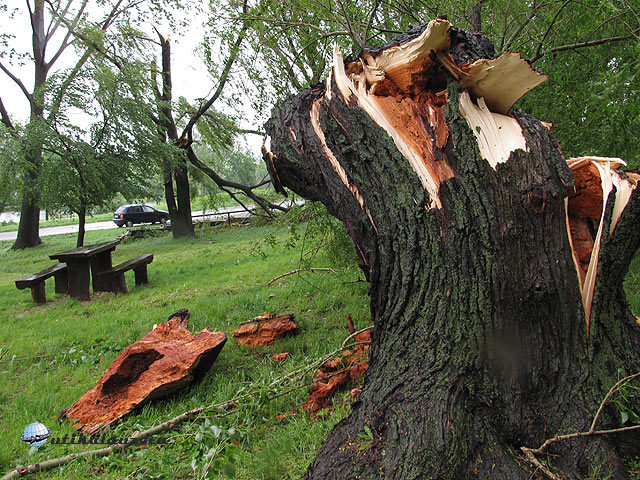
Dare to be daring, darling... Who would tell that breathing out as much as possible until you don't have any air left in your lungs is also just as much of a challenge as facing your true self? Everyone (including singers) is holding their breath all the time and treating inhalation as some supernatural thing, but just as I mentioned before, breathing is your life-support. It works by itself and manipulating it in any way only good for damaging the voice. If you think that air is a harmless element, take a look at what a strong windblow can do to a tree:

Scary, right? What do you think, what does the manipulated, pushed-out air will do to your vocal chords? If you push the air out using your rectus abdominis muscle, and you don't let your diaphragm work by itself, you can get a hoarse voice quite soon, and if you keep up, you can even get some serious vocal problems (vocal chord nodules, vocal fold cyst, laryngitis, chorditis, etc.). Trust your body, because your body knows better than you (actually your brain) knows, and it knows how to work properly you just have to dare to let the body take over the muscular work while you are singing and speaking.
Interesting enough, every problem you encounter during singing, they are there during speaking. If you think about it, it is obvious: since singing is speaking in slow motion, than it is obvious that like when you slow down a video footage, the "problems" are easier to recognize than at normal speed.

OK, don't freak out! Your body knows better, so all you have to do is to let your fears go and dare to be daring, darling!
And just to make sure you'll finish reading this entry with a smile on your face or a good laugh, there you go, and inspirational picture and an example of Tim:

Wednesday, December 10, 2014

Teachers and mentors

I have 10 years of singing lessons behind my back. Or so to say: I have had my ever first singing teacher about 10 years ago. I had several singing teachers, and I would like to list them for you here and also what I have learned from them.

Erzs茅bet Feichter
My ever first singing teacher at the B茅la Bart贸k music school in B茅k茅scsaba (Hungary). I was her pupil for two joyful years filled with Italian arie antiche. This was also the time when I decided to become a singer instead of getting a well-paid job - well done there, dear me...

Zsolt Ol谩h
I had private singing lessons from him in Budapest (Hungary) and he taught me how important it is that your audience understand the lyrics you are singing on, and he was the first one who jokingly shouted at me: Open your mouth!! And nevertheless, his warm bariton voice is just as sweet as a cello can be...

Ildik贸 Hajnal
My main subject teacher (head of the Early Music department) and singing teacher during the 6 years I have spent in Fontys Conservatorium. Yes, she is Hungarian, living in The Netherlands for several years now, and she is an amazing singing teacher, singer and musician. She taught me many things, and I will be always grateful to what she's done for me during these years. She taught me the importancy of knowing your body (though I'm afraid I will never be such an anatomy expert as she is), to know what happens in your body while you are singing. Also she encouraged me to find my own path and played a huge role in me becoming the person I am now (whether she admits it or not, it's true). She was also the one who introduced me to Lajos Szamosi's approach to freedom in singing

Peggy Hegeman
I had singing lessons from her during my Master studies, and we were working on my classical repertory, and some twang and belting (for Gershwin and Cole Porter). She taught me to dare to make my own choices, and gave me these two amazing sentences:  
  1. Singing is moving air, not bricks.
  2. Don't take a breath for the whole week!
Whenever she said in the beginning of the lesson "Let's make some noise", I knew the fun is about to happen. She also taught me how important it is to stay in the flow and (as she said) not shaking hand with every single note I am singing. She encouraged me to keep myself open and willing to know more about different singing techniques and methods, approaches - and in the end make the selection from this bunch of information for myself.

Kinga Cserj茅si
I had my first lessons on Lajos Szamosi's approach from her and she was the first one to ask after a few rounds of excercises: how was it? And she kept asking questions like this, bring me to analyse and watch what I am doing (completing the Alexander Technique lessons and Ildik贸's goal to make me more aware of what happens in my body), and slowly I became able to work on myself and using creativity and intelligence as a tool in my own development. Until then I thought my intellect and intelligence is rather a curse on me than an advantage, and now I know that using your intelligence on the wrong place can work against you, but allowing your intellect doing what it needs to do can bring you forward. Just keep calm and let the different parts of your body (muscles, organs, etc.) and your personality work efficiently and not like a workaholic, all the time.

Heent Prins
The loveliest and calmest old lady I've ever met, living in The Hague, and was the singing teacher of Kinga Cserj茅si. Heent still had lessons from Lajos Szamosi, and I continue my learning process on this approach by having singing lessons from her. She is teaching me how singing can be as simple as breathing, and that you just need to keep yourself open, listen very well, open your mouth and breathe. Not taking a breath, because that's some kind of preparation before producing a sound, but because breathing is a natural need to stay alive (this idea completes Peggy's sentence: Don't take a breath for the whole week). Letting go the control of your conscious and let your subconscious (a.k.a. your body) work is a great risk, but "Your body knows better" (Edvin Szamosi), so just let your body work for you and benefit from its natural wisdom. It is damn scary, but worths the effort to let go.

Wednesday, December 3, 2014

Breath yourself free - The Szamosi Approach to Freedom in Singing

In an earlier entry I mentioned Lajos Szamosi's name and I even quoted him about how important is the connection between a free mind and a free voice.
Freedom in singing (in my opinion and according to many) comes from the freedom in your breathing. If your breathing is not free, your voice just cannot be free, because singing is basically speaking in slow-motion on different heights in your vocal-range, with or without rhythm but certainly with some kind of pulse, it depends the style and genre of the piece/song in question. Also, without breathing out you cannot speak, you cannot even produce a sound. The fact that changing the "pitch" during this speaking in slow motion becomes a melody is mostly thanks to a composer's idea and/or the performer's musicality, but melodious phrases or not, singing is still breathing out and nothing more than that. Sounds like a piece of cake, right? Well, it's not, but as a matter of fact we are making it difficult for ourselves.

Before I would go on discussing this, here's this quite famous quote by F. M. Alexander:
"You translate everything - whether physical, mental, or spiritual into muscular tension."
But where does this muscular tension comes from? How does it appears in our body? In order to let the muscles in your body function well, they need oxygen, to which the most basic life support gives a helping hand, and this is breathing. You don't need to think about breathing, neither you need to think about let your heart beat, you just do it. Now... whenever something unexpected or even something expected happen to us - whether it's good or bad - our breathing naturally reacts to it, and mostly it stops for a split of a second. Do you remember when you were a kid and you played hide-and-seek? You might remember that you even held your breath a little while you were hiding in your hide-out. The same happens when you are afraid of something or fear starts to take control over your mind: your breathing changes and your body translates your fears into muscular tension.

On top of this, all of us have the urge and the wish to blend in the society, but this wish doesn't come from our nature, it is rather how our parents raised us. People behave in a certain way because they were told or taught (some even tamed) to behave that certain way. I bet everyone knows the mainstream psychology experiment with the monkeys and the ladder, for those who don't know see this link.
We would like to blend in the society because in the ancient times being alone and being seperated from the tribe meant that you're condemned to death. So the same survival instinct that keeps us breathing actually is also to be "blamed" for making us being afraid of standing alone and stick out from the crowd. I'm not saying that teamwork and society is bad, and I also would like to emphasize that nothing is black and white on this matter. Just as I mentioned in my previous entry: the "goodness" of a result (or in this case anything) depends on the current situation, therefore blending into the society in order to survive is a good attempt, but completely useless at obtaining personal freedom.
Also blending in the society demands you to say no to your yearning for freedom, and answer the expactations of the term "normal" and "usual". Why? Because you would like to belong to the tribe, you don't want to stand alone, you would like to survive. Of course as soon as you discover and taste a little bit of inner personal freedom you realize that these terms are just not applying on your life and those are just patterns you can push yourself to hold onto. The terms mentioned above bring a few other terms along like "beauty", "good", "bad", etc. Norms that shouldn't rule your daily life but give you a decent guideline instead.

The Szamosi Approach to Freedom in Singing aims for freeing yourself from these norms and from the urge to judge every single thing you do. According to Lajos Szamosi (see his biography here) there is no beautiful voice, neither an ugly sound: if the voice is free than it naturally delights the listener (I would say:  beauty in itself is boring, but beauty with content is more valuable than anything). Just like Friedrick Matthias Alexander, the developer of the Alexander Technique, Lajos Szamosi also strove to overcome his own vocal problems, and he actually also succeeded to correct these vocal problems (but in the end he got so passionate about teaching that his carreer didn't matter much anymore in the end). Fun fact: Alexander and Szamosi were each other's contemporaries, but they (as far as I know) never met, still they got to the exact same conclusion while working on their own very similar problems: you can solve your vocal problems by freeing your breath.

A free and smooth airflow brings the necessary amount of oxygen to the muscles, helps to keep your mind clear and as a result the muscles become relaxed, and remain in a relaxed and open state. There's a singing excercize I've learnt a while ago that makes you breath out more and more; as a result you feel dizzy at a certain point (because there's too much oxygen in your blood), and if you go on regardless the dizzyness, you will pass out a little. Recently I picked up this excercize at Heent Prins's lessons and at some point I got frustrated that I got dizzy after each round of this excercize, so I've asked her whether it is possible to get used to exhalate this much, to which her answer was accompanied by a huge nod (like it was so obvious, and it was obvious actually): "Can you get used to it? Yes!"
If you would like to get to know this approach, and you happen to live in The Netherlands, two licenenced teachers of the Szamosi Approach will come here and give a workshop on 6 December 2014 in The Hague. For more info, please click here.

Wednesday, November 26, 2014

Twists in the system

So just to make this clear: I'm not against public education and conservatories. Actually I had a great time during the 6 years of conservatory at Fontys Conservatorium in Tilburg: interesting and challenging projects, getting to know all sorts of people (crazy musicologists, autenticity-obsessed instrumentalists, nice people, amazing singers and inspiring teachers). Though I am still not entirely sure whether the Prussian result-oriented education system is the perfect education model for singers, and at the same time I'm sure that applying a few adjustments would lead to some very remarkable results.

Actually, in general I am absolutely sure and convinced that the Prussian result-oriented system is not the perfect education model for teaching performing arts. The funny thing about this whole thing that teachers know this very well, but as soon as you get to the board of the school and the students and their results become numbers in statistics, sh*t hits the fan and art education is being pushed into marketing terms and norms, and in the end the ones who damage the most are the students. Being considered as a single number in the statistics puts pressure on the student, which is not a bad thing, but the more sensitive ones just barely able or completely unable to deal with the stress this result-based system brings. That's why you can see many crying dancers, musicians (especially singers) on the corridors around the time of exams and personal evaluation.
But the core of the problem is what society demands us to do: be fast, produce good results and make a lot of money. If we are talking about arts these demands will only bring misfortune and make artists miserable. Why? I think it's obvious, but here's the thing:
  1. You need to take the time for doing well something. Sometimes it happens in a split of a second, but many of us need time, and rushing us will only make us frustrated and anxious which leads to even slower process.
  2. Producing good results is a contradiction in itself, since the term "good" is a relative; a result's goodness very much depends on the situation in question.
  3. If you think you can make a lot of money with arts, you have definitly chosen for the wrong carreer. Nowadays you can make a lot of money by making people miserable or benefit from miserable people (for example a lawyer, an undertaker, a doctor or a financial expert will always have a good salary, because there will be always lawsuits for lawyers, dead to bury, sick people to cure and poor people). Every profession connected to arts will always cost more work than you actually get paid for, and also you make people happy and you entertain them (hopefully).
Pushing a singer (or any artist) into good results in short time is the worst and most inhuman deed ever, because these results cannot hold. I will never forget my ever first singing exam evaluation. Just a little background to the story: I am from Hungary, a country which is highly praised for the musicians and singers it produces, but the fact is that although organ, piano, violin and any other instrumental education is really amazing with amazing technique, you barely find any singing teacher who actually will teach proper and useful singing technique. There is no education for that at all; they help you build your repertory (which, in my opinion, you can do yourself as well, but whatever...) but they don't give you a good and firm basis to help this repertory and your future carreer. It is not because they are mean or evil, they are just absolutely clueless (there are exceptions of course, that's out of the question). So by the time I got accepted to Fontys Conservatorium in Tilburg, I had several years of repertory building, but no technique. I began my studies in September 2008 and had my ever first singing exam in December 2008, and the first evaluation I got back then was this: "We are not sure that we can give you a diploma in the end of the 4th year". You can imagine how mad I got after hearing this insane sentence: I still don't understand how can anyone say anything like this to someone with barely 4 months of vocal training behind the back? Fortunately I was always motivated by comments like this, and after cooling my head down and crying a lot under the shower, feeling completely humiliated, I got my act together and despite the continuous comments on how my level as a singer is not good enough comparing to my classmates I worked hard and not only finished my Bachelor degree with a good result but also accepted to the Masters. I had also people who encouraged me during these years. For instance We had a masterclass with Ian Honeyman in the second year and when he saw me completely depressed by not being able to sing If music be the food of love by Henry Purcell as perfect as I wanted it to be, he asked me how long do I have proper vocal training? I told him that was the second year I am having one, to which he told me that then I have a young voice so don't worry. And you know what? He was right. I've been told at that time very often that working on your technique, on your voice is a development for a lifetime, but somehow nobody care to mention this in the end of the evaluations. Now that I think back I was thinking and what were my expectation after brief 2 years of training I think I had way too high expectations towards myself - also willing to please my singing teacher, Ildik贸 Hajnal, though she has never asked for it, was a wrong idea.

Another twist in this system comes from this: not only singers, instrumentalists are working on their technique during their training, and then get an evaluation on their performing skills. I mean, how sick is that? Yes, work on that scale and that excercise, but actually we won't care about that on your exam! Ehh??? As soon as I managed to understand that the exam committee won't ever pay any attention to my technique but my performance skills and I began to work on rather enjoying making music than worry about the deficiencies of my technique, my grades and evaluation became (step by step) better and better. And here's another twist: your audience doesn't care about your technique, neither are they interested in a perfect technique.

Sooo... basically we are running in circles when it comes to music education. I wonder why is that... Why can't we try to find a proper solution for the situation in question instead of sticking to solution patterns? Because that's what marketing does: using patterns, which works everywhere perfectly fine except arts, and here I'm not talking about organizing an event, I'm talking about achieving results in the personal development of a performer and/or an artist.
Why are we so obsessed with pushing arts in marketing terms and try to evaluate its relsults based on numbers while we know it doesn't work that way? It's like being a complete retard: I know this rounded shaped object won't fit in this tiny square shaped hole but I will still do my best to fit it even if I know that the round shaped object would fit in a round shaped hole, and I have to find a tiny cube for this tiny square shaped hole. Simply madness... Arts don't work like this...

Wednesday, November 19, 2014

If I had ever knew that...

Just as I mentioned in my first entry that I would like to talk about things that hardly anyone mentioned me during my singing studies.

The first thing I could name here is this: if your voice changes, your personality and/or behaviour changes and vice-versa. The main problem of singing education nowadays that most of singing teachers and conservatories and even professional ensembles and artists are considering the human voice as an instrument that similar to a violin or a piano. That wouldn't much of a problem, but they are treating these "human instruments" as they would never treat a violin, a piano or any other musical instrument - the treatment very often could be described as smashing it with a hammer and expecting gratefulness for it from the singer.
Singing education nowadays never talk about how destructive it can be if you stick with imitating your singing teacher (for the record: I'm not saying that imitation your teacher is a bad thing, because it is a way of learning and an important step in the development of the voice, but you cannot get stuck in it!). They also not mention how important it is to become as independent as possible, aside from a very few exceptions, and feel yourself lucky if your teacher not only encourages you to do so, but also bears with your kicks towards freedom.

Why am I saying this? Well, believe or not, as a singing teacher you are far more responsible for your pupils than any instrumental teacher. Lajos Szamosi (notice: Hungarian singing pedagogue, the developer of the approach to freedom in singing; for more info about the approach see link, but I will quote him quite often since his studies and publications made a huge impact on my way of thinking) in one of his publication says (I'm paraphrasing from the original Hungarian): "To get someone to free singing is therefore not a musical task but personal, psychological task and problem, because there is a deep connection between the freedom in singing and one's personal, inner freedom. Only the material we use on the pedagogical way is musical."
Do you know the moments when you read two simple sentences and then you have this "aha!"-experience? I had exactly this thing after I've read this. I mean, I was busy with practising all sorts of scales and was stressing myself with acrobatic excercises and then you just figure out that you've been way too harsh towards yourself as a person and you tried to "treat your instrument with a hammer". I would add to this something that Elizabeth Schwarzkopf said at a masterclass: "Singers have to work much more, because they are the instrument. You can always buy a new violin when it's broken, a flute, or whatever... but NOT the voice! The human being is the instrument. And that's why I would say, that singing is something very essential."
So... If the human being is the instrument itself, you cannot seperate the mental-emotional part of this instrument. Letting a singer (pupil or professional) torture himself or herself with self-hatred is just simply wrong, but in a way it is so typical in our chaotic world. Singers are refined human beings, working on their whole "equipment" throughout their whole life (until death, even if they are not active performers in the last years of their life). Even funnier: if you begin to focus more on getting know yourself better and love yourself more, you will be just really unable to avoid radical development. Caution! The people around you (family, friends, your significant other) may complain, but since you are in the middle of a process don't apologize and don't stop in the middle of the process, but tell them to bear with your new You a bit longer and don't regret anything. Btw, this is the reason it is like hell to date a singer... :))

And finally just a fun fact: hiring singers in earlier centuries (around 15th-17th centuries) were always more expensive than hiring instrumentalists. This (of course) doesn't make instrumentalists worth less than singers, it's just a historical fact... And just a +1 a fact that none of any instrumentalist will become a fine musician if he/she doesn't like to sing (chill out, you don't have to be a soloist...).

So bottom line: don't be afraid of change. It is normal and natural - and you don't have to be a singer to welcome the idea of change :))

Wednesday, June 5, 2013

Welcome

Yes, yes, another singer/musician begins to blog about music, feelings and such, in this sense this blog is nothing new, but... But as every individual is different, and every voice is different, therefore this particular's singer's blog will be unavoidably different from any other blog about singing. I was considering the possibility of going on youtube and make a singing vlog instead of writing about it, but then I thought I don't want to be another Eric Arceneaux (whose work and art I appreciate a lot, and please check out his channel on Youtube, it's awesome!) by giving you all kinds of singing excercizes and showing tricks in order to let you sing better. No, I will not give you scales and excercizes, neither anatomy lectures or approve how tasteless can too much vibration in the voice can be on particular repertoire's... Nope, I don't want to do that.

I would like to talk about how I became a singer, and also how I think as a singer about the development of the voice, discussing singing technique (not by bringing up scales and such), methods and approaches that ever helped me, and also history(!) of singing and singers. I have met only a few singing teachers who actually knew or talked about these things, so why not putting them on one (blog)spot?

I wasn't born in a traditional musician family, though music played an important role in my family I am one of the very few that actually chose music as a profession. Everyone else in my family chose something down to earth as a profession (my grandmother was working in the financial sector, my parents have a printing business, and so on), and actually my intention was to become a writer, journalist or anything that pays well and gives a good financial support. And then last year of grammar school came and all the lessons in music school took their effect and I decided to become a singer. Actually first I wanted to became an opera singer, but later I figured out that I don't have the natural great voice for opera - and now I know, that a volume and voice can be developed, but it takes a lot of time and hard work.
So as you can see, you can become a singer (which is rather irrational and emotional), even if you are a rather "rational"- and "analytic"-type person (more of a scholar than a true artist and musician by blood) like for example me,

I would like to tell you what I believe in as a singer. And by that I don't mean to say I'm right, or that this is the only true path you can follow to become a singer or to find the "singer" in yourself. This is my story: it might be an example to follow or to avoid as much as possible. The choice is yours.